


© International Feldenkrais® Federation
The fascinating story behind the origin of the Feldenkrais Method
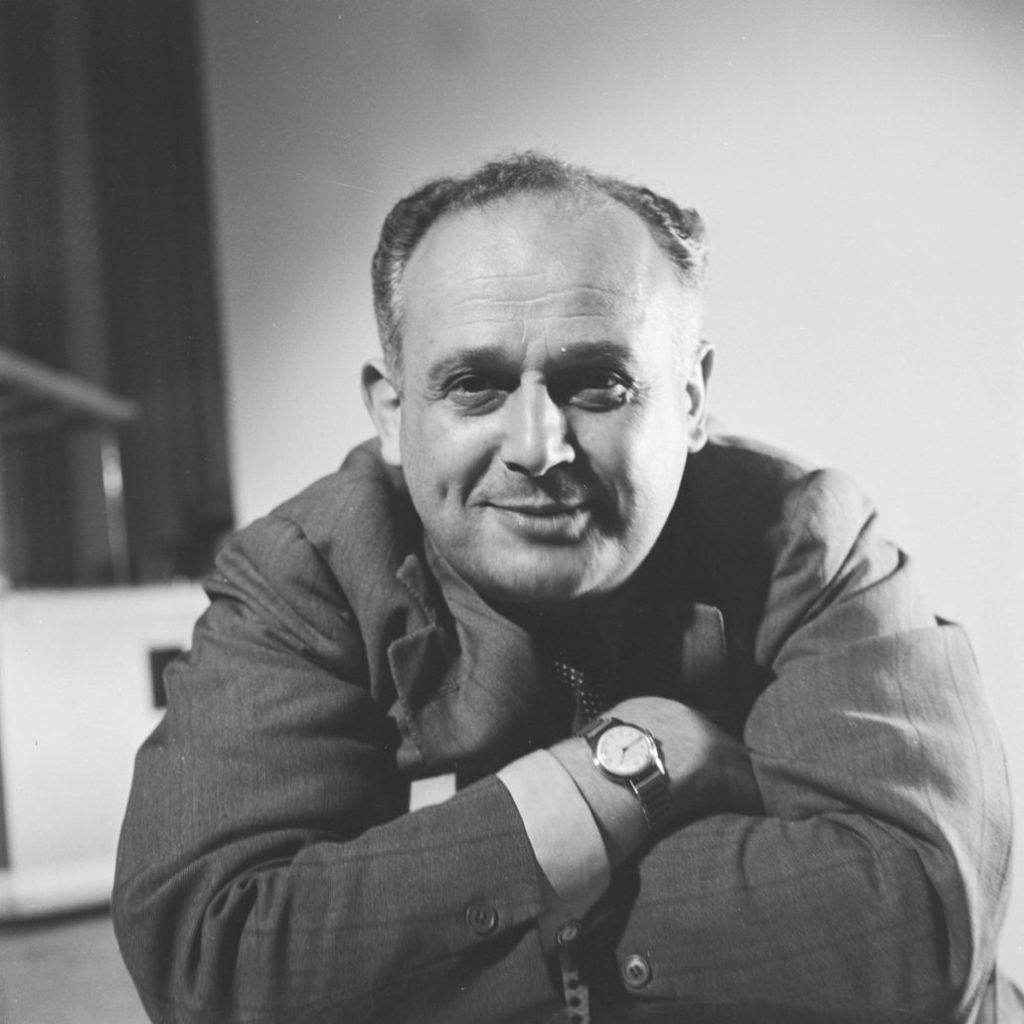
The Feldenkrais Method was developed by Moshé Feldenkrais (1904-1984) in the years following the Second World War. He was a fascinating person who achieved a Ph.D. in physics, fought the Nazis and was one of the first judo black belts in Europe.
Feldenkrais’ life holds the key to the development of the method which he based on research in various fields including human development, physics, neuroscience and biomechanics combined with his personal experience with martial arts. In this section, we have compiled a short summary of his life and the events that shaped Feldenkrais himself and the method that would become his legacy.
Childhood and Youth
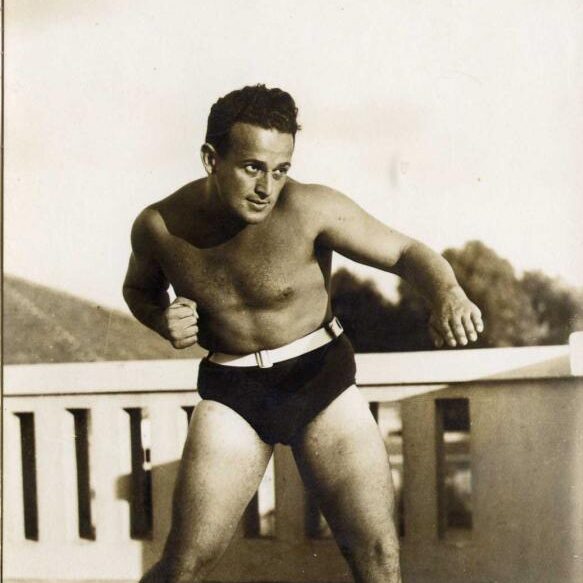
Moshé Feldenkrais was born into a Jewish family in 1904 in what is now Ukraine. During the Jewish pogroms of 1918 he emigrated with his family to, what was at the time, the British Mandate of Palestine. Here, his interest in movement began when he started practicing jiu-jitsu as a young man. It was also at this time, during a soccer match in 1929, that he suffered a knee injury which would become the deciding factor of his development of the Feldenkrais Method.
In the 1930s, Feldenkrais moved to France to study physics at the University of Sorbonne in Paris. Here he achieved a Ph.D. in Physics – with Marie Curie as one of his teachers.
Fighting the Nazis
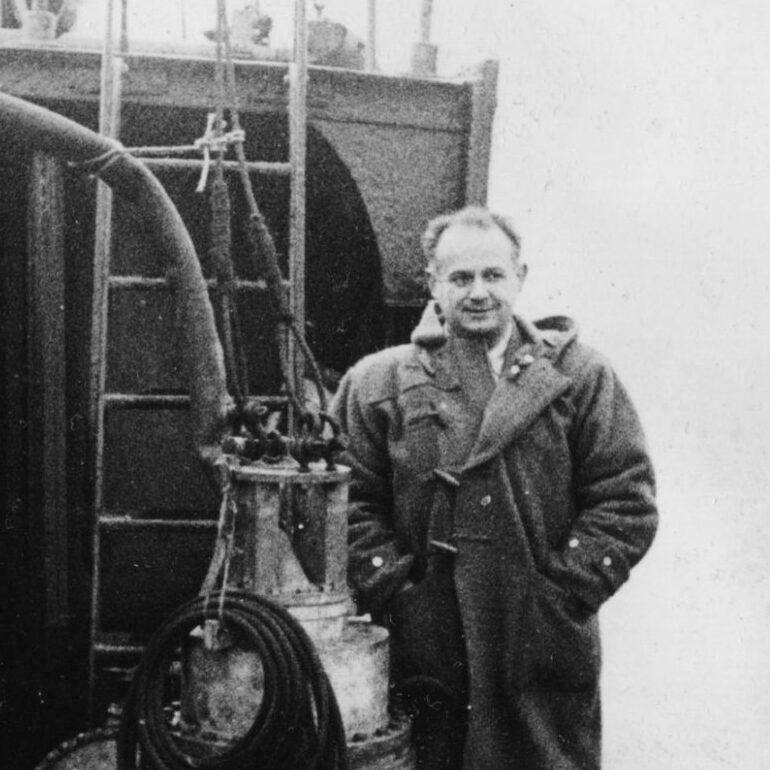
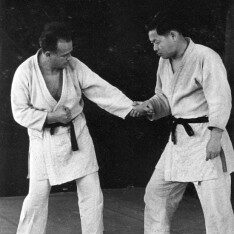
On the eve of the Nazi invasion of France in 1940, Feldenkrais fled to Great Britain, where he remained for the duration of the war. Here, he developed weapons for the Allies while also teaching British soldiers hand-to-hand combat using techniques he had learned from jiu-jitsu and judo.
During the course of his resistance work, Feldenkrais aggravated the knee injury he had suffered ten years earlier. The prospect of a risky knee operation, that might leave him with chronic pain and reduced mobility, made him experiment with ways of rehabilitating himself. Thus, the foundations of the Feldenkrais Method were set.
Rehabilitation and (Re)discovery
Feldenkrais was inspired by the connection between body and mind. By observing the ways in which children learn to crawl and later walk, he reached the conclusion that all the ways in which we move must be learned. It stood to reason then, he thought, that it would be possible to learn better, more efficient movement patterns.
His experiments were a success. Through repeated exercises focusing on an increased awareness of movement, he managed to improve the strength and functionality of his knee to such a degree that the operation was no longer necessary.
Developing the Method
In 1949, Feldenkrais published his first book on the method: Body and Mature Behaviour: A Study of Anxiety, Sex, Gravitation and Learning. He would continue to develop and perfect the method throughout his life.
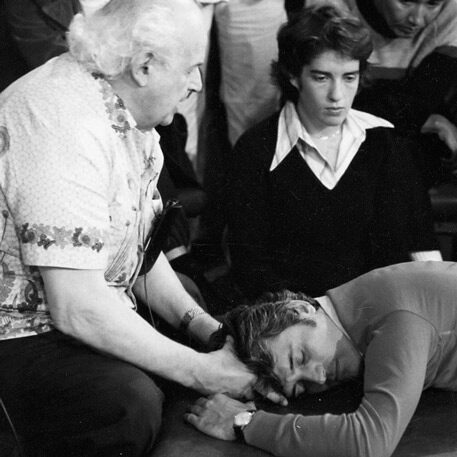
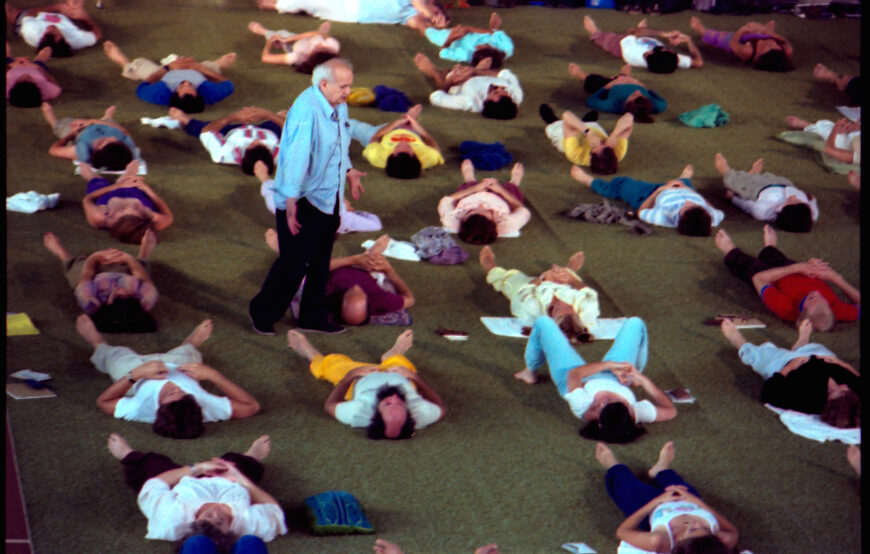
In 1959, Feldenkrais moved to Israel. Here, among other things, he became the personal trainer of David Ben-Gurion who suffered from chronic back pain. Meanwhile, he developed the individual form of education Functional Integration – and later on, the group classes Awareness Through Movement, because he wanted more people to experience the benefits of the method.
An Enduring Legacy
From the end of the 1960s, Feldenkrais began educating Feldenkrais practitioners that would continue his research into the method and spread awareness through both professional as well as free classes open to all. He continued teaching publicly until an illness in 1981 forced him to stop at the age of 77.
Moshé Feldenkrais died in 1984, but his method lives on. The international Feldenkrais association, International Feldenkrais Federation (IFF), has continued his work in educating new practitioners and developing the method on the basis of Feldenkrais’ principles.
Nothing is permanent about our behaviour patterns except our belief that they are so.
Moshé Feldenkrais
Do you want to learn more?
This was just an excerpt of the most important parts of Moshé Feldenkrais’ life. On the International Feldenkrais Federation’s website, you can read articles or listen to recordings of his teachings – all free of charge.
Has the story of Feldenkrais inspired you to challenge your behaviour patterns? In our FAQ, you can find answers for the most frequently asked questions you might have about the method, its benefits and what you can expect from your first Feldenkrais session.
Do you want to learn more?
This was just an excerpt of the most important parts of Moshé Feldenkrais’ life. On the International Feldenkrais Federation’s website, you can read articles or listen to recordings of his teachings – all free of charge.
Has the story of Feldenkrais inspired you to challenge your behaviour patterns? In our FAQ, you can find answers for the most frequently asked questions you might have about the method, its benefits and what you can expect from your first Feldenkrais session.