©Anna Regine Irgens Bromann
Feldenkrais is for everybody! Answers for the most frequently asked questions
If you wish to learn more about the Feldenkrais Method – and what it can do for your life – then you’ve come to the right place! Below, we’ve gathered the answers for some of the questions we are asked most frequently as Feldenkrais practitioners.
What is the Feldenkrais Method?
In short, the Feldenkrais Method is a somatic form of education that combines movement and consciousness to help the individual create positive improvements in mind and body.
The method is both a form of education, a process and a system that gives you the means to help yourself in the long term. The method is not a form of clinical treatment or a training program.
Instead, it is based on the decades-long research in physics, neuroscience and biomechanics done by Moshé Feldenkrais (1904-1984), who was both a Ph.D. of physics under Marie Curie and a black belt in Judo which he helped pioneer in Western Europe.
If you want to learn more about the development of the Feldenkrais Method, you can find a more detailed overview by clicking the link “History” in the header.
How can Feldenkrais help me?
The Feldenkrais Method can help you if:
- You want to achieve new insights into the ways in which you use your body and the subconscious movement patterns that shape your everyday life
- You want to become more aware of the connection between your body and mind
- You are currently going through a rehabilitation process after an injury or operation
- You experience acute or chronic pain in your joints or muscles (head, neck, shoulders, back, hips, legs, knees, feet)
- You are suffering from stress-related symptoms or burnout
- You want to improve your mobility, strength and flexibility through accessible exercises
- You want to improve your performance in sports, dance, music or performing arts
- You are looking for a way to help you age gracefully without straining your body excessively
How does Feldenkrais differ from massage or physiotherapy?
As opposed to massage or physiotherapy, which primarily work by stimulating joints and muscles, the Feldenkrais Method focuses on the connection between body and mind. Our movements are controlled by our nervous system via input from the brain. The Feldenkrais Method therefore works from the assumption that you can change your movements by changing your thought patterns.
Through the classes and individual lessons, experimentation of movement is combined with consciousness to examine the underlying thought patterns that govern our movements. Thus, it is possible to create new connections between thought and movement, which can uncover adverse movement patterns and help alleviate chronic pain and discomfort in our everyday lives.
How does Feldenkrais differ from yoga?
As opposed to Yoga, the Feldenkrais method does not require you to be strong or flexible in order to participate. The method does not use strenuous movements or positions that have to be learned through repetition and physical training.
Instead, the method focuses on experimentation of movement and thought to uncover the unconscious movement patterns that we all have that may be responsible for pain, discomfort or reduced mobility.
The Feldenkrais Method can be used as an effective supplement for Yoga practitioners that are looking for new insights into their movement patterns and want to improve their performance.
Do you have to be in shape to do Feldenkrais?
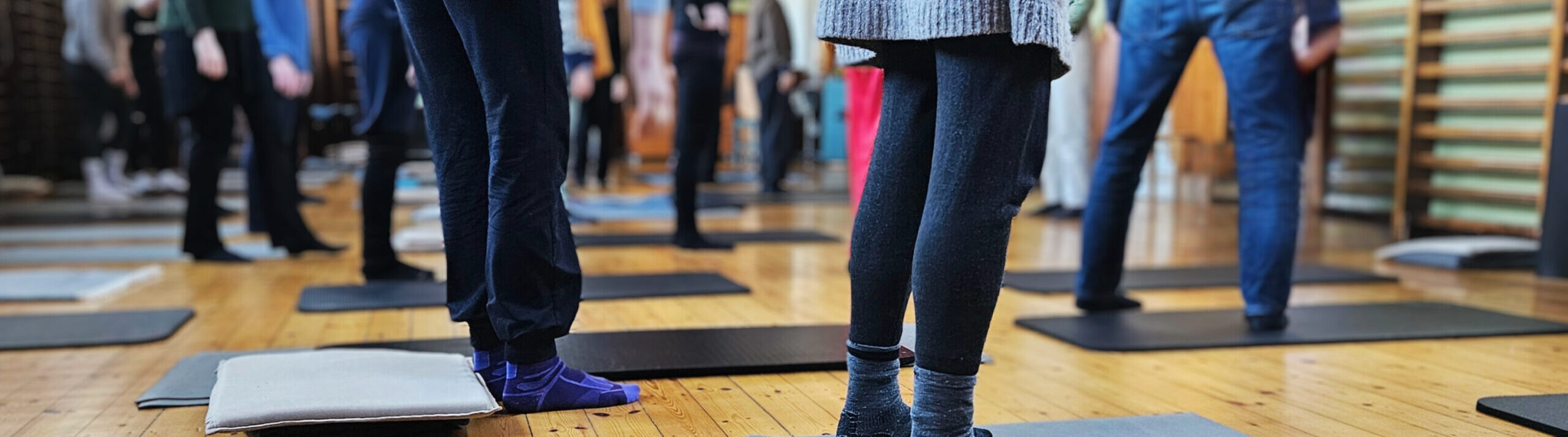
No! The classes are based on slow and gentle movements that focus on exploration and consciousness rather than strength or flexibility. The method accounts for your individual circumstances and needs.
There is no one right way of movement that applies to everyone. How you move best or most efficiently is very individual, and if you are experiencing pain or you have reduced mobility, the classes can be adjusted accordingly. Thus, you can safely participate in both group classes and individual lessons regardless of physical strength or flexibility.

Is Feldenkrais suitable for older people?
Yes! The Feldenkrais Method is adapted to all ages and experience levels. The classes are based on slow and gentle movements that focus on exploration and consciousness rather than strength and flexibility.
Therefore, you can safely participate in both group classes and individual lessons regardless of physical strength and flexibility. Many supporters of the method practice it as a way of aging gracefully, since it can help increase flexibility, strengthen joints and improve posture without strenuous physical exercise.
Is Feldenkrais suitable for children?
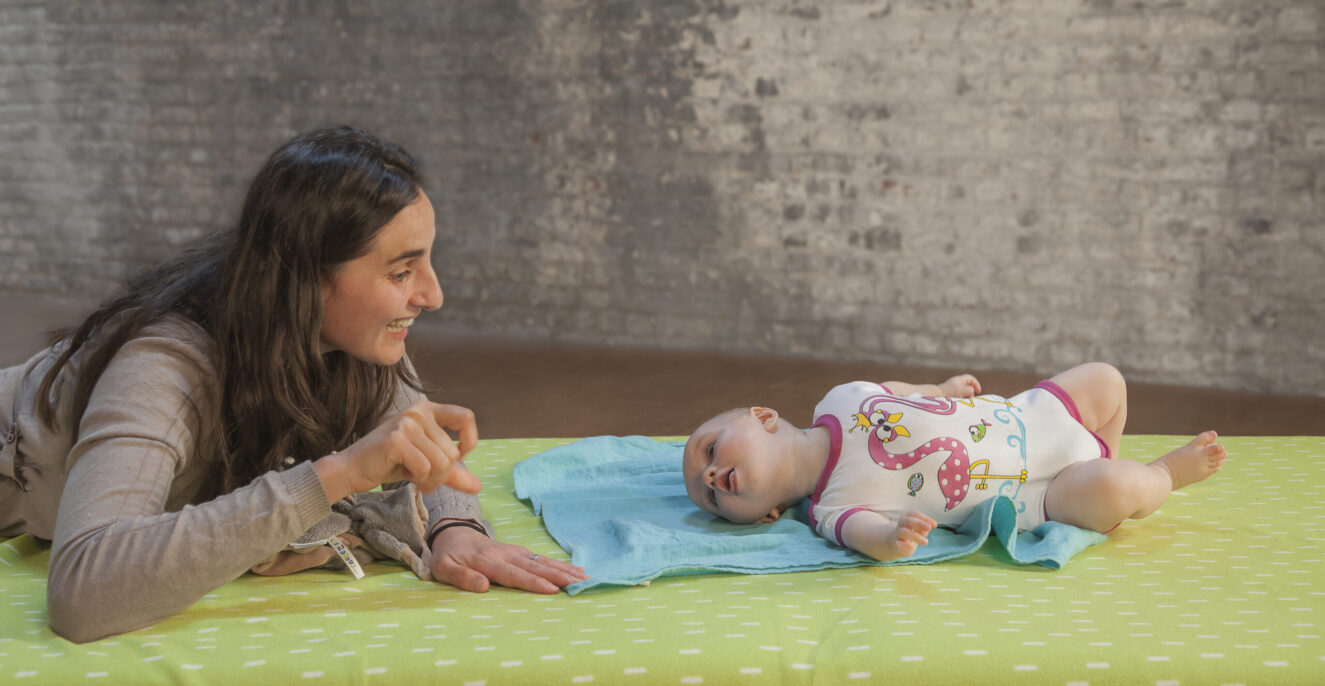
Yes! The Feldenkrais Method is adapted to all ages and experience levels. The classes are based on slow and gentle movements that focus on exploration and consciousness rather than strength and flexibility.
Moshé Feldenkrais himself often worked with children including infants with hereditary illnesses including cerebral palsy. Some of the techniques used in the method are also based on the instinctive ways in which young children move.
Can Feldenkrais help professional athletes and performing artists?
Yes! There is always room for improvement! You can learn to improve what you already excel at by becoming even more efficient and effective so you have the energy to go further and train harder.
Many of Feldenkrais’ biggest adherents are professionals striving to consistently perform at their best. Among the method’s many professional supporters are the violinist Yehudi Menuhin, the tennis player Martina Navratilova and the actress Dame Judi Dench.
Weightlifters experience that their weights feel lighter, tennis players and golfers find their strikes becoming less strenuous and more intuitive, runners can run further and performing artists feel as though they can dance or perform all night.
What should I bring to a session?
You only need to bring two things to a Feldenkrais session: Comfortable clothes that you can move in freely, and your own curiosity!
The Feldenkrais practitioner can provide additional tools such as yoga-mats, specially designed therapy tables and foam rollers.
How many sessions should you participate in?
There is no clear answer to the question of how many classes or lessons you have to participate in to achieve the unique results you are looking for. The Feldenkrais Method is both a form of education, a process and a system that can help you develop the necessary tools to help yourself.
The method is not a form of clinical treatment or a training program and thus there is no clearly defined end point for your individual journey. However, the method also equips you with the necessary tools to help yourself in your daily life – including outside of concrete classes and lessons.
I’m completely fascinated by how it can help you change patterns, allowing you to discover your body anew. Even something like walking. Sometimes I leave a class and think: Wow, can you walk like this? It almost feels like the first time I’ve ever walked.
Signe, 37, Stage artist and disability support worker
Do you want to try the Feldenkrais group classes?
If you have become interested in trying Awareness Through Movement, you can find additional information on scheduled classes, teams and practitioners in our calendar below.
…Or maybe you would rather try an individual lesson?
If you want to try an individual Feldenkrais lesson, you can use our overview to find an accredited practitioner with the skills you are looking for. Read about their specialities and find their contact information below